
Introduction
Mental health has become one of the most discussed topics in modern society. Millions of people around the world struggle daily with stress, anxiety, brain fog, fatigue, and lack of motivation. While many assume these issues are purely psychological, science increasingly shows that the state of your metabolism plays a powerful role in how your brain functions.
Your metabolism is not just about burning calories or losing weight. It is a complex biological system responsible for producing the energy your body — and your brain — needs to function properly.
When metabolism slows down, the brain often suffers first.
Low energy production can affect:
- Mood stability
- Mental clarity
- Memory
- Stress resilience
- Sleep quality
Recent research suggests that improving metabolic health can significantly improve mental well-being. In other words, a healthier metabolism may lead to a healthier mind.
In this article, we will explore the scientific connection between metabolism and mental health, the warning signs of a slow metabolism, and natural strategies that may help support both your physical and mental well-being.
Understanding Metabolism: More Than Just Weight Loss
Many people associate metabolism with dieting or weight management. However, metabolism is much more than that.
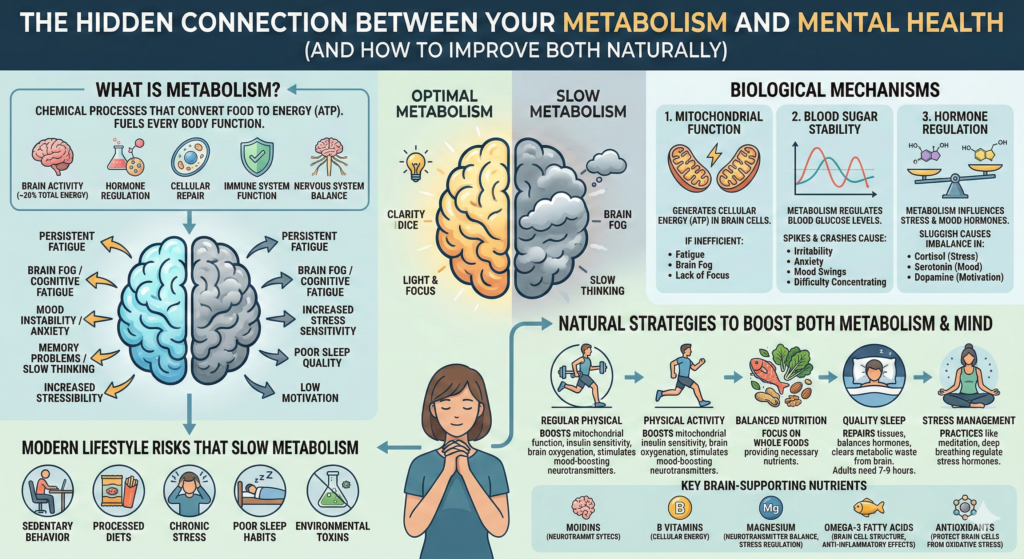
Your metabolism refers to the chemical processes that convert food into energy. This energy fuels every function in your body, including:
- Brain activity
- Hormone regulation
- Cellular repair
- Immune system function
- Nervous system balance
The brain alone consumes about 20% of the body’s total energy, even though it represents only about 2% of body weight.
When metabolic efficiency declines, the brain may struggle to maintain optimal performance.
This can lead to symptoms such as:
- Mental fatigue
- Difficulty concentrating
- Mood instability
- Low motivation
- Emotional imbalance
This is why many experts now believe that metabolic health and mental health are deeply interconnected.
How Metabolism Affects Brain Function
Your brain depends heavily on a constant supply of energy. When metabolism is functioning properly, brain cells receive the nutrients and energy required for optimal communication.
However, when metabolic function becomes impaired, several problems may arise.
Energy Production in Brain Cells
Brain cells rely on mitochondria, tiny structures responsible for generating cellular energy. If mitochondria become less efficient due to metabolic dysfunction, brain cells may not receive enough energy.
This can lead to:
- Brain fog
- Slow thinking
- Memory problems
- Lack of focus
Many scientists now consider mitochondrial function to be one of the key factors influencing mental performance.
Blood Sugar Stability and Mood
Metabolism also regulates blood sugar levels.
When blood sugar spikes and crashes frequently, the brain may experience instability in energy supply.
This can result in:
- Irritability
- Anxiety
- Mood swings
- Difficulty concentrating
Stable blood sugar levels help maintain consistent brain energy and emotional balance.
Hormone Regulation
Metabolism influences hormones that affect mental health, including:
- Cortisol (stress hormone)
- Serotonin (mood regulator)
- Dopamine (motivation and reward)
If metabolism becomes sluggish, hormone production may become imbalanced, which can impact emotional well-being.
Signs Your Metabolism May Be Slowing Down
Many people experience metabolic slowdown without realizing it. The symptoms are often subtle and may be mistaken for everyday stress or fatigue.
Some common signs include:
Persistent Fatigue
Feeling tired even after a full night of sleep can indicate that your body is struggling to produce sufficient energy.
Brain Fog
Difficulty focusing, remembering details, or thinking clearly may signal metabolic inefficiency.
Mood Changes
Metabolic imbalance can affect neurotransmitters responsible for regulating mood.
Increased Stress Sensitivity
When metabolism slows, the body may have difficulty managing stress hormones.
Poor Sleep Quality
Sleep and metabolism are closely linked. Metabolic disruption can affect circadian rhythms and sleep patterns.
If several of these symptoms appear together, improving metabolic health may be beneficial.
The Science Behind Metabolism and Mental Health
Over the past decade, researchers have increasingly focused on the metabolic roots of mental health conditions.
Studies in fields such as neurobiology and metabolic medicine have found that:
- People with metabolic disorders often experience higher rates of depression and anxiety.
- Insulin resistance may affect brain signaling pathways.
- Chronic inflammation linked to metabolic dysfunction can impact brain health.
Inflammation in particular has received significant attention.
When metabolism becomes inefficient, the body may produce more inflammatory molecules. These molecules can cross into the brain and interfere with normal neural communication.
This may contribute to symptoms such as:
- Emotional instability
- Cognitive fatigue
- Low motivation
While metabolism is not the only factor influencing mental health, it appears to play an important role in maintaining optimal brain function.
Natural Ways to Support a Healthy Metabolism and Mind
Fortunately, several lifestyle habits may help support both metabolic health and mental clarity.
Regular Physical Activity
Exercise is one of the most effective ways to improve metabolic efficiency.
Physical activity helps:
- increase mitochondrial function
- improve insulin sensitivity
- support brain oxygenation
- stimulate mood-boosting neurotransmitters
Even moderate exercise, such as walking, can support brain health.
Balanced Nutrition
A diet rich in whole foods provides the nutrients necessary for metabolic function.
Key nutrients that support metabolism and brain health include:
- omega-3 fatty acids
- B vitamins
- magnesium
- antioxidants
Foods such as fish, leafy greens, nuts, berries, and whole grains may support both metabolism and mental wellness.
Quality Sleep
Sleep plays a critical role in metabolic regulation.
During sleep, the body repairs tissues, balances hormones, and clears metabolic waste from the brain.
Adults generally require 7 to 9 hours of sleep per night for optimal metabolic and mental performance.
Stress Management
Chronic stress can slow metabolism and disrupt hormone balance.
Practices such as:
- meditation
- deep breathing
- yoga
- spending time in nature
may help regulate stress hormones and support metabolic health.
The Role of Brain-Supporting Nutrients
Certain nutrients appear to play a particularly important role in supporting both metabolic activity and brain function.
For example:
B Vitamins
Essential for cellular energy production and nervous system health.
Magnesium
Supports neurotransmitter balance and stress regulation.
Omega-3 Fatty Acids
Important for brain cell structure and anti-inflammatory effects.
Antioxidants
Protect brain cells from oxidative stress and metabolic damage.
A well-balanced diet usually provides these nutrients, but many people today consume diets lacking in essential micronutrients.
Why Modern Lifestyles Can Slow Metabolism
Modern lifestyles can create conditions that negatively impact metabolic function.
Some contributing factors include:
- Sedentary behavior
- Highly processed diets
- Chronic stress
- Poor sleep habits
- Environmental toxins
These factors may gradually affect metabolic efficiency over time.
As metabolism slows, both physical and mental performance may decline.
Understanding these influences can help individuals make lifestyle choices that support long-term health.
The Mind-Body Connection
Mental and physical health are deeply interconnected.
While mental health challenges are complex and influenced by many factors, supporting metabolic health may be one important piece of the puzzle.
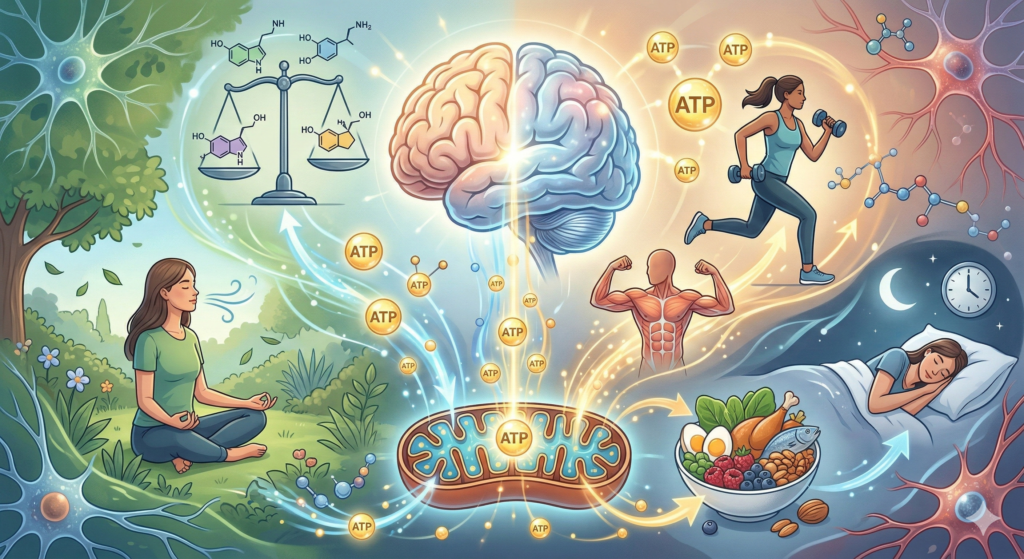
Improving energy production at the cellular level can potentially influence:
- mood regulation
- cognitive clarity
- resilience to stress
- overall mental vitality
This holistic perspective highlights the importance of treating the body and mind as part of the same system.
Conclusion
The relationship between metabolism and mental health is becoming increasingly clear as scientific research advances.
Your metabolism does far more than regulate body weight — it fuels every process that keeps your brain functioning properly.
When metabolism slows down, the brain may struggle to maintain optimal performance, potentially leading to fatigue, brain fog, mood instability, and decreased motivation.
Supporting metabolic health through lifestyle habits such as balanced nutrition, regular exercise, quality sleep, and stress management may contribute to improved mental clarity and emotional well-being.
By understanding the connection between metabolism and mental health, individuals can take proactive steps toward building a healthier body and a sharper mind.
Small changes made consistently over time may lead to meaningful improvements in both physical energy and mental resilience.