
Introduction
As people get older, many begin to notice changes in their body that were never a problem before. One of the most common complaints is a slower metabolism. Suddenly, maintaining a healthy weight becomes harder, energy levels drop, and fat seems to accumulate more easily.
While these changes can feel frustrating, they are not unusual. In fact, research shows that metabolism naturally changes with age. However, the good news is that there are many natural ways to support and improve metabolic health, even after the age of 40.
Understanding why metabolism slows down is the first step to improving it.
What Is Metabolism?
Metabolism refers to all the chemical processes that occur in the body to convert food into energy. This energy powers everything from breathing and digestion to muscle movement and brain function.
Your basal metabolic rate (BMR) is the amount of energy your body burns while at rest. The higher your BMR, the more calories your body burns naturally throughout the day.
Several factors influence metabolism, including:
- Age
- Muscle mass
- Hormones
- Activity level
- Diet
As these factors change over time, metabolism can slow down.
Why Metabolism Slows Down After 40
There are several biological reasons metabolism tends to decrease with age.
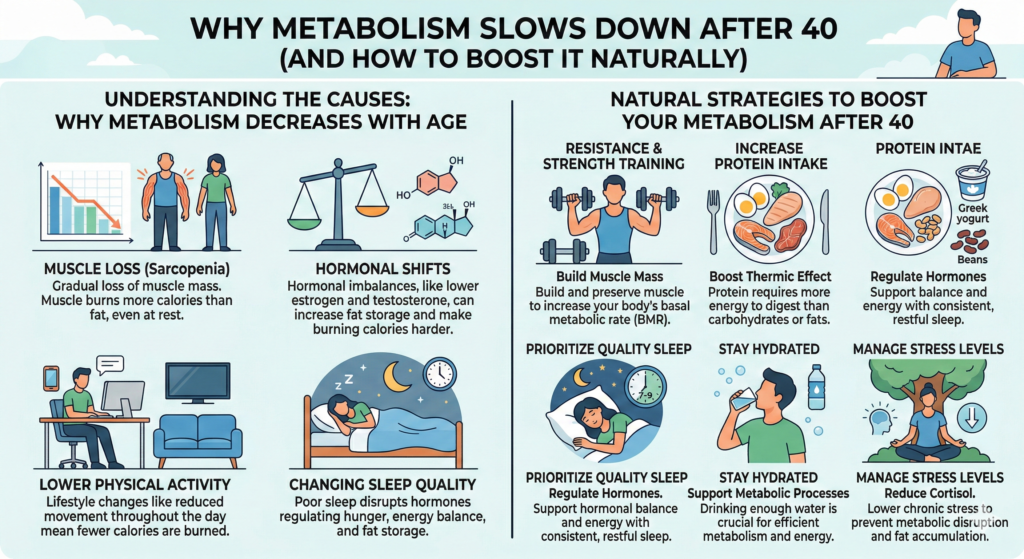
Loss of Muscle Mass
One of the biggest factors is the gradual loss of muscle mass. Starting around age 30, adults begin losing muscle naturally if they do not actively work to maintain it.
Muscle burns more calories than fat, even when the body is at rest. When muscle mass decreases, the body burns fewer calories overall.
Hormonal Changes
Hormones play a major role in regulating metabolism. After 40, many people experience hormonal shifts that affect energy levels and fat storage.
For example:
- Estrogen levels decrease in women during perimenopause
- Testosterone levels gradually decline in men
- Insulin sensitivity may decrease
These hormonal changes can make it easier to gain weight and harder to burn calories efficiently.
Lower Physical Activity
As people age, lifestyle habits often change. Work responsibilities, stress, and family commitments may reduce the amount of daily physical activity.
Less movement means fewer calories burned, which contributes to a slower metabolism.
Changes in Sleep Quality
Sleep also affects metabolic health. Poor sleep can disrupt hormones that regulate hunger and energy balance.
Studies show that insufficient sleep may increase appetite and cravings for high-calorie foods.
Signs Your Metabolism May Be Slowing Down
Some common signs include:
- Unexplained weight gain
- Fat accumulation around the abdomen
- Low energy levels
- Difficulty losing weight
- Feeling colder than usual
If several of these symptoms appear together, metabolism may not be functioning as efficiently as it once did.
Natural Ways to Support Metabolism After 40
Although metabolism changes with age, there are effective strategies that can help support it naturally.
Strength Training
Resistance training is one of the best ways to maintain muscle mass. Activities like weightlifting or bodyweight exercises help build and preserve muscle, which increases calorie burning.
Even two to three sessions per week can make a significant difference.
Increase Protein Intake
Protein requires more energy to digest than carbohydrates or fats. Eating protein-rich foods may help slightly increase metabolic rate.
Examples include:
- Eggs
- Fish
- Chicken
- Greek yogurt
- Beans and legumes
Protein also helps preserve muscle mass.
Stay Hydrated
Water plays a crucial role in metabolism. Dehydration can slow down metabolic processes and reduce energy levels.
Drinking enough water throughout the day helps support overall metabolic function.
Improve Sleep Quality
Quality sleep supports hormone balance and energy regulation.
Healthy sleep habits include:
- Going to bed at consistent times
- Limiting screen exposure before sleep
- Creating a calm sleep environment
Adults generally need between seven and nine hours of sleep per night.
Manage Stress Levels
Chronic stress increases cortisol levels, which can contribute to weight gain and metabolic disruption.
Stress-reducing activities may include:
- Walking outdoors
- Meditation
- Deep breathing exercises
- Regular physical activity
Can Supplements Support Metabolism?
Some natural supplements may help support metabolic health when combined with a healthy lifestyle. Certain ingredients are studied for their potential to support energy production, fat metabolism, and overall metabolic balance.
However, supplements should always be considered as a complement to healthy habits rather than a replacement for them.

Final Thoughts
A slower metabolism after 40 is a natural part of aging, but it does not mean weight gain or low energy is inevitable. By maintaining muscle mass, improving diet quality, staying active, and prioritizing sleep, it is possible to support metabolic health and overall well-being.
Small daily habits can make a powerful difference over time.
Support Your Metabolism Naturally: