
Introduction
Have you ever had the feeling that you’re doing everything right — eating better, trying to exercise more — but the scale just won’t budge?
Or maybe you constantly feel tired, bloated, or struggle to lose body fat despite your efforts?
These could be signs that your metabolism is running slower than it should.
In this article, you’ll learn:
- What metabolism really is
- 5 common signs of a slow metabolism
- Practical steps you can take today to support it naturally
What Is Metabolism, Really?
Your metabolism is the collection of processes your body uses to convert food into energy.
It affects:
- Fat burning
- Daily energy levels
- Hormonal balance
- Digestion
- Body temperature
When your metabolism slows down, multiple systems in your body can feel the impact.
1. You Struggle to Lose Weight

Are you eating reasonably well but not seeing changes?
A slower metabolism means your body burns fewer calories at rest. This can make fat loss significantly harder, even if you’re not overeating.
What you can do:
- Prioritize protein in every meal
- Incorporate strength training
- Avoid extreme crash diets
2. You Feel Constantly Tired

If you wake up tired or feel drained throughout the day, your body may not be efficiently converting nutrients into usable energy.
What you can do:
- Aim for 7–8 hours of quality sleep
- Reduce refined sugar intake
- Stay properly hydrated
3. You Often Feel Cold

Metabolism plays a key role in heat production. If you frequently feel colder than others around you, it could be related to metabolic activity.
What you can do:
- Engage in regular physical activity
- Include natural thermogenic foods like ginger and green tea
4. You Experience Bloating or Slow Digestion
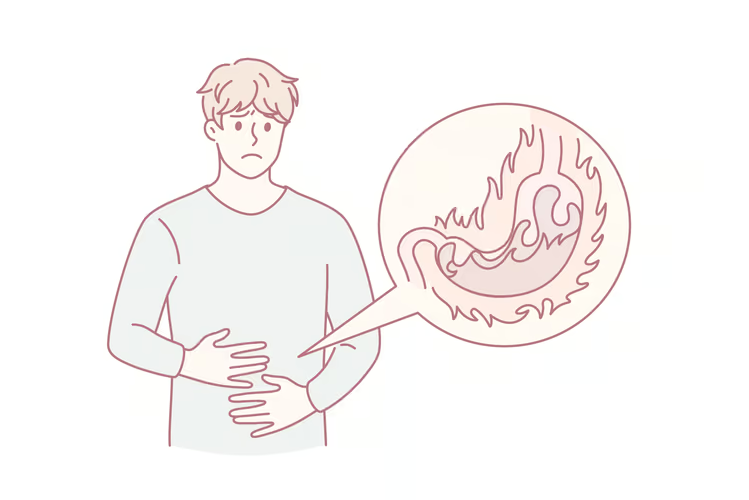
A sluggish metabolism can affect how efficiently your digestive system works.
What you can do:
- Increase natural fiber intake
- Eat slowly and mindfully
- Limit ultra-processed foods
5. You Find It Hard to Build Muscle

Metabolism and hormonal balance are closely connected. If building lean muscle feels unusually difficult, metabolic factors may be involved.
What you can do:
- Focus on resistance training
- Ensure adequate protein intake
- Prioritize sleep and stress management
How to Naturally Support a Healthy Metabolism
Small, consistent habits can make a meaningful difference over time.
Evidence-based strategies include:
✔ Strength training
✔ Adequate protein intake
✔ Proper sleep
✔ Stress management
✔ Staying physically active
Certain foods may also support metabolic function, such as:
- Green tea
- Coffee (in moderation)
- Ginger
- Chili peppers
- Iron-rich foods

Final Thoughts
Your metabolism isn’t your enemy — it’s a dynamic system that responds to your lifestyle.
While genetics play a role, daily habits have a significant impact on how efficiently your body uses energy.
For some individuals, natural supplements are also used as additional metabolic support, especially when combined with proper nutrition and exercise.
We’ll explore that topic in more detail in the next article.